Small household gadgets are easy to buy and easy to regret. A motion light that falls off the cabinet, a frother that stops charging after a month, a plug-in lamp with no safety listing: most of these problems can be spotted on the product page before you order. This guide covers what to look for in everyday household tech, with most of the space given to safety, because that is the part listings explain least.
Decide how it is powered
The power source tells you a lot about a gadget's convenience and its safety checks.
- Replaceable batteries (AAA, coin cells): simple and low risk, but you keep buying batteries. Common in kitchen scales and remotes.
- Built-in rechargeable lithium battery: convenient and cordless, but lithium batteries lose capacity over time and need some care (see below). Common in motion lights, handheld vacuums, frothers and earbuds.
- USB powered, no battery: runs from a USB port or a phone charger. Low voltage and simple. Common in LED strips and desk lamps.
- Plugs into a wall outlet: anything with a mains plug or its own AC adapter. This category needs the most scrutiny, covered in the UL/ETL section.
- Solar: a small panel charges a built-in battery. Output depends on how much direct sun the panel gets.
Lithium batteries: what to check and how to live with them
Most cordless gadgets use lithium-ion cells. They are safe in normal use, but damaged, poorly made or badly charged cells can overheat. The National Fire Protection Association publishes plain safety guidance for consumers. The main points:
- Use the cable or charger that came with the device, or one that matches its stated input.
- Charge on a hard surface, not under a pillow, on a bed or on a sofa, and unplug the device once it is fully charged.
- Stop using a device if the battery swells, smells, leaks, gets unusually hot or makes noise. Do not throw lithium batteries in household trash. Use a battery recycling drop-off.
- Keep devices out of direct sun and hot cars.
On the product page, look for the battery capacity, the charging port (USB-C is the most convenient) and the charging time. Lithium batteries also affect shipping, because carriers handle them under dangerous goods rules. That can make delivery slower for battery products than for others.
Wireless gadgets need an FCC ID
Anything that sends a radio signal, such as Bluetooth, Wi-Fi or a 2.4 GHz remote, must have FCC equipment authorization before it can be sold in the US. Most other electronics also fall under FCC rules for unintentional radio emissions. Authorized radio devices carry an FCC ID on the label, in the manual or on a screen in the settings. You can look it up in the FCC ID search, which shows the grant, the test reports and often internal photos.
A "CE" mark on a product or listing is a European marking. It does not show US compliance.
Mains-powered devices: UL and ETL listings
For anything that plugs into a wall outlet, look for a safety certification mark from a Nationally Recognized Testing Laboratory (NRTL). The OSHA NRTL program recognizes these labs, and OSHA publishes the current list of NRTLs. UL and Intertek (whose mark is ETL) are the names most shoppers see, but they are not the only recognized labs.
A real listing means a sample was tested to the relevant US safety standard and the factory is subject to follow-up inspections. Check that the mark is on the product or its adapter itself, not only in a photo or the description. For chargers, heaters, kettles and anything with a heating element or high power draw, we would not buy a product without one.
Food-contact parts
For frothers, whisks, scales with bowls and similar kitchen tools, check what touches the food or drink. Stainless steel whisk heads and food-safe plastics are common. Read the cleaning instructions: many battery kitchen gadgets are not waterproof, so you rinse the whisk or wipe the platform, and keep the handle and charging port dry.
Water and dust ratings
Outdoor lights and some bathroom or kitchen gadgets list an IP rating, such as IP65. The first digit is protection against dust and solids, the second against water. IP65 means dust-tight and protected against water jets, which suits rain on an outdoor light but not submersion. If a listing says "waterproof" without an IP rating, treat it as splash resistance at most.
Category notes
Motion sensor lights
Check the mounting method (magnetic strip, adhesive, screws), the light color (warm or cool white), whether you can set it to always-on, and how it charges. A rechargeable light avoids battery swaps but needs taking down to charge. We list the HVIERO rechargeable motion sensor night light with a magnetic mount and the Pzsunly rechargeable motion sensor under-cabinet light. Both charge over USB and have no mains plug.
Kitchen scales
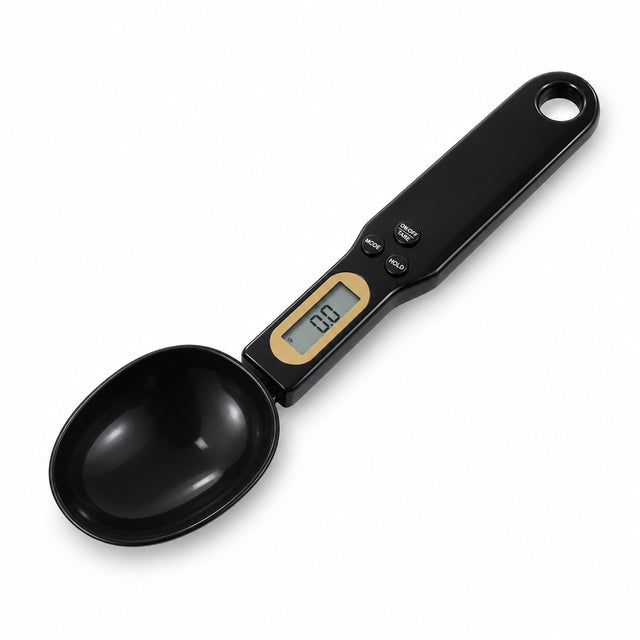
Look at capacity and resolution together. A scale that reads to 0.1 g is useful for coffee, spices and baking powders, but it usually has a low maximum. A 1 g scale with a 5 kg capacity is better for general baking. A tare button and the battery type are the other things to check. We list the Kitchya CFC-001 digital measuring spoon scale, listed with a 0.1 to 500 g range, and a 5 kg digital kitchen scale that reads in 1 g steps. Both are in Kitchen Scales.
Milk frothers
Handheld frothers are simple: a motor, a whisk and a battery. Check whether it charges by USB or uses AA batteries, how many speeds it has and whether the whisk head is removable for cleaning. We list the JIZHOU MF101 rechargeable milk frother with three speeds. More in Kitchen Gadgets.
Handheld and car vacuums
Small cordless vacuums are for crumbs, car seats and desks, not for whole floors. Check the run time, how the filter is cleaned or replaced, and the charging method. Suction figures in listings are not measured in a standard way across brands, so compare them with caution. We list a cordless handheld car vacuum that both vacuums and blows air. See Handheld Vacuums.
Decorative and LED lighting
USB-powered lamps and LED strips are low voltage and low risk. Check the cable length, the plug type and whether you need a separate USB charger. If a lamp comes with its own wall adapter, the adapter is a mains device and the UL/ETL advice above applies to it.
A short checklist
- How is it powered, and what does that mean for charging and safety?
- Does a wireless device have an FCC ID you can look up?
- Does a mains-powered device or adapter carry a UL, ETL or other NRTL mark?
- What are the real specs (capacity, run time, IP rating), and are they stated clearly?
- What is the warranty, and how do returns work?
Our products come with a 90-day limited warranty and a 30-day return window, described on our returns page. Delivery times are on our shipping page.
Sources
- National Fire Protection Association, Lithium-ion battery safety
- Federal Communications Commission, FCC ID Search and Equipment Authorization
- Occupational Safety and Health Administration, Nationally Recognized Testing Laboratory Program and current list of NRTLs